Insights·Cases
EB-1A for a painter: six months of preparation and an approval in three weeks
A Forward Visa case
Published material, exhibitions, awards — three criteria most painters already have, and three that most often turn out to be met only on paper. Kristina, a painter, was approved for EB-1A three weeks after filing. Her video, and a look at why the thickness of the file mattered less than the logic: from the choice of each criterion to the document that shapes the case as a whole.
Sergei Voronin · published September 25, 2026 · Updated: September 27, 2026 · 4 min read
EB-1A
Category
Painter
Profession
0
RFE
2–3 weeks, premium processing
Processing
Yes
Premium processing
Approved with no RFE, category E11
Outcome
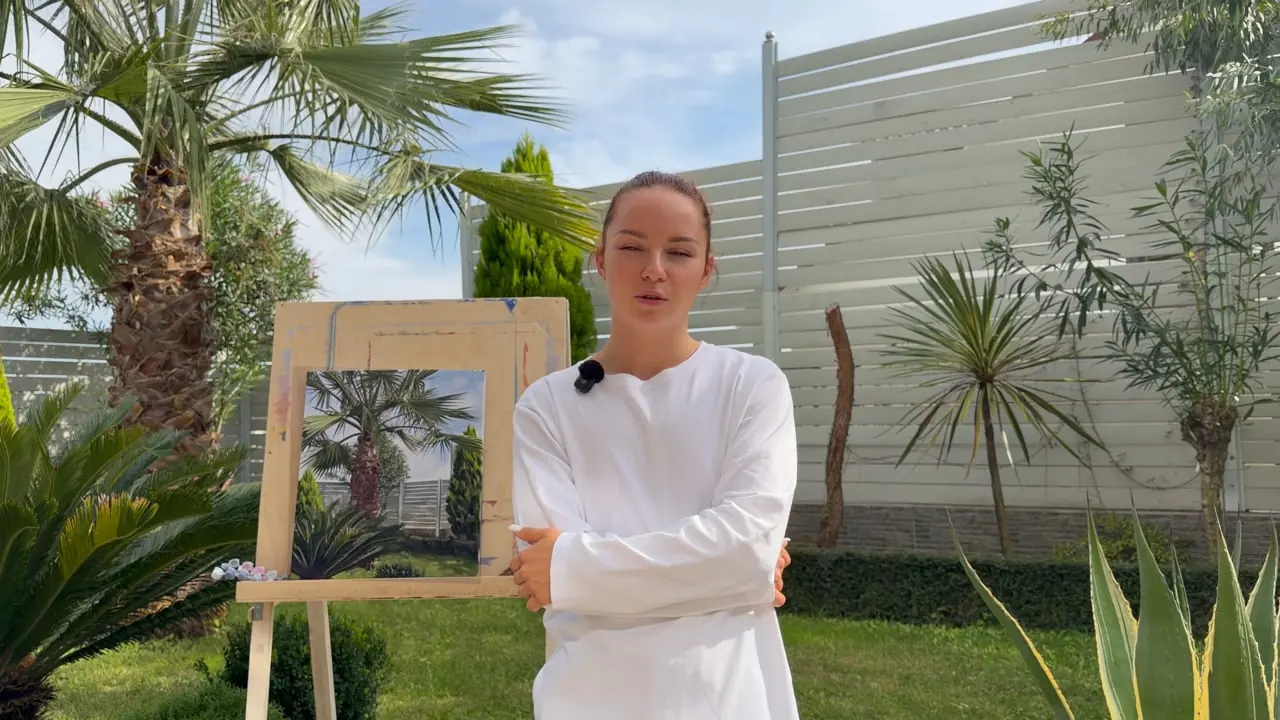
“Forward Visa prepared my case in the EB-1A category: painter. The core was the evidence that holds up — publications, exhibitions and awards. Preparation started in January 2023 and finished in July. Review took two to three weeks, and the approval came at the beginning of August 2023. What mattered to me was seeing the logic of the whole effort, from the choice of each criterion to the document that would shape how the case reads.”
— Kristina, painter, EB-1A
Who she is, and what she brought
Kristina is a painter with an exhibition record: solo and group shows, published material about the work, awards. For EB-1A that is the classic set. Art supplies three of the ten criteria that belong to it: published material about you, exhibitions, awards. And it is painters whose three criteria most often turn out to be met only on paper: a catalogue that never names the institution, a blog post with no editorial staff, a festival certificate with no selection. The job of the petition is not to collect everything. It is to choose what can be checked.
What became the core of the petition?
The core is three criteria, and each one has an outside source that can be checked.
Exhibitions. The officer does not read the poster. He reads the institution: where the work was shown, what standing the venue has, whether there was selection. A solo exhibition at a gallery with a reputation weighs more than ten appearances in group projects with no selection. Each exhibition has a dossier on the venue: a description, published material about it, the other exhibitors.
Published material about the painter. Writing about her and her work in outlets with an editorial staff and an audience: reviews, interviews, exhibition roundups. Not social-media posts, and not text Kristina wrote herself.
Awards. Prizes and competitions with selection and a known jury, at a national or international level. For each one: the organizer, the jury, the rules of selection.
Six months of preparation, from January to July, went not into collecting but into selection and dossiers. For each piece of evidence, a document about the institution, the publication or the competition, and a line that ties all of them into one account of where she stands in the field. That is what the testimonial is about: the logic as a whole, from the choice of a criterion to the document.
Filing and timing
The petition was filed in July 2023 with premium processing. The decision came in two to three weeks — at the beginning of August, with no Request for Evidence (RFE). The approval category is E11: EB-1A on a self-petition, with no employer. Premium processing was a deliberate choice. With the file already ready, it turns months of waiting into three weeks, and a fee of a few thousand dollars is not comparable to half a year of uncertainty.
The advocate's comment
Painters’ petitions fail not for a lack of exhibitions and published material, but because the officer cannot check them. In this case every piece of evidence was built as a pair: the fact itself, and a dossier on the source — the venue, the publication, the competition. When every page answers the question “who confirms this from outside,” an RFE does not come. The logic of a petition matters more than its volume. Kristina saw that, and said it better than I would have.
What should painters take from this?
- The three criteria that belong to you — exhibitions, published material, awards — work only with a dossier on the source: the institution, the publication, the jury.
- A solo exhibition with selection is stronger than ten group shows without it. A review in an outlet with an editorial staff is stronger than a hundred posts.
- Premium processing, once the file is ready, is a rational choice: three weeks instead of months.
How an officer reads each criterion is in “U.S. talent visa criteria”. Whether you have the grounds is in the quiz below.
This material is informational and is not legal advice on your situation.
Complimentary
Check your chances
in two minutes
Seven questions — and a preliminary read of your profile and category.